You’re Not Responsible for Their Mental Health
At Pride Point, we often hear people say: “I’m just trying to support their mental health.” And support is important, but support should never become responsibility, fear, or control.
This conversation matters in LGBTQIA+ communities because we’re already more likely to be carrying mental health strain. Stonewall found 52% of LGBT people experienced depression in the last year and 61% experienced anxiety.
And when abuse is present, the impact can be even more serious. Galop’s research highlights that LGBT+ survivors of domestic abuse are twice as likely to have self-harmed and almost twice as likely to have attempted suicide.
So what should you look out for?
A few “check-in” questions:
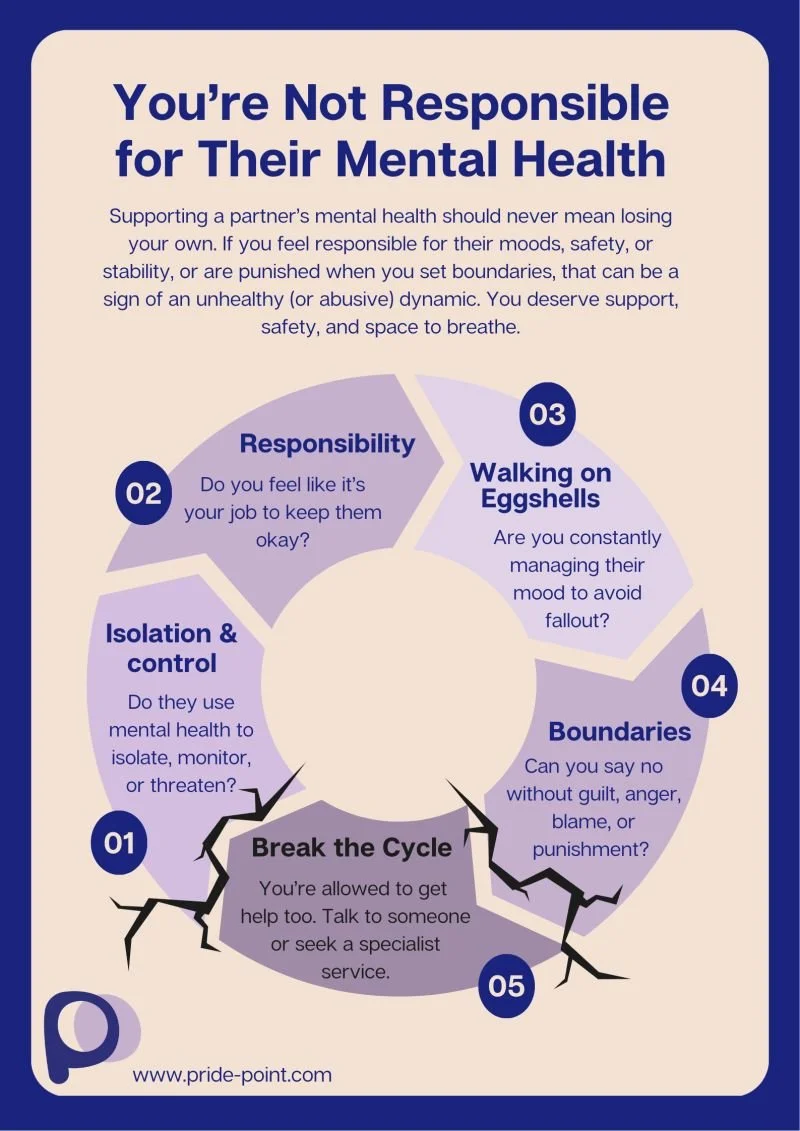
- Do you feel like it’s your job to keep them okay?
- Are you walking on eggshells to avoid fallout?
- Can you set boundaries without guilt, blame, anger, or punishment?
- Do they use mental health to isolate, monitor, or threaten you?
- Are you being made to feel that saying no or leaving would “cause” a crisis?
You can provide support and still say: I’m allowed boundaries. I’m allowed support too.
👉 How Pride Point can help:
We deliver LGBTQIA+ inclusive domestic abuse education and training for workplaces, services, and community groups, helping people recognise warning signs, understand the dynamics, and respond safely with confidence. We also run workshops and awareness sessions designed to build healthier, safer communities.
If you’d like to book training, host a workshop, or collaborate, connect with us and send a message, or comment and we’ll reach out. 📞📲