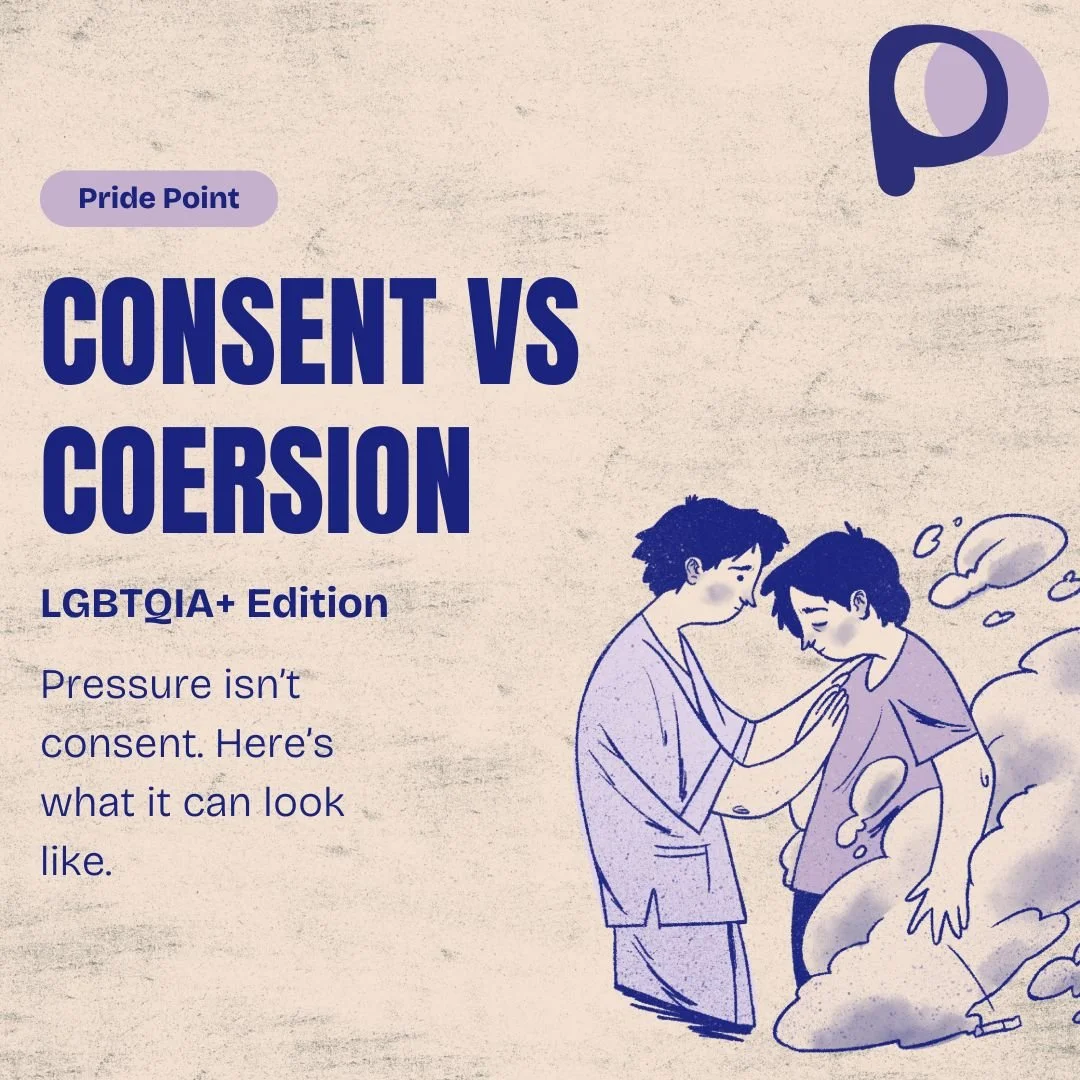
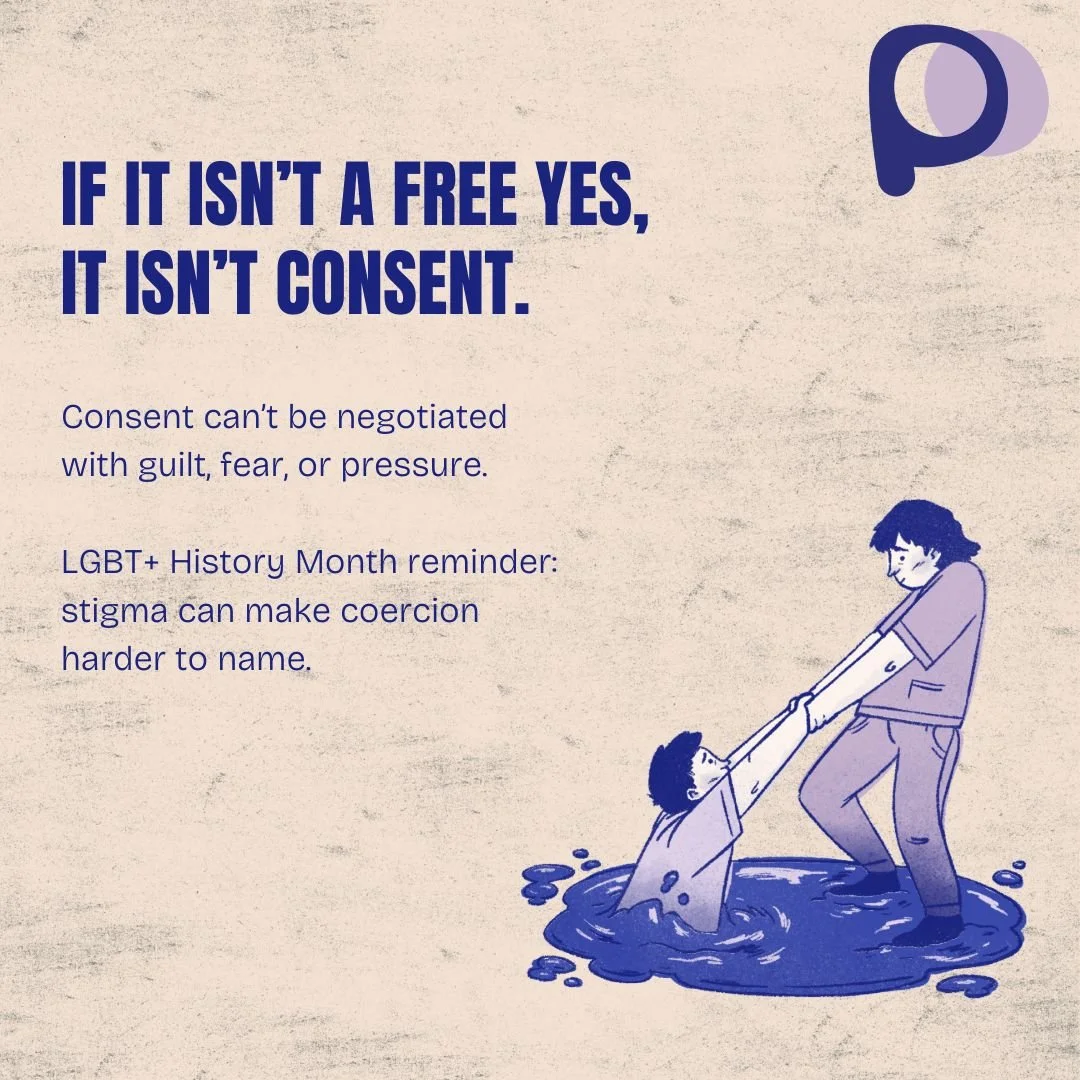
Consent vs Coersion
Consent isn’t the absence of “no”... it’s the presence of a free, informed “yes.”
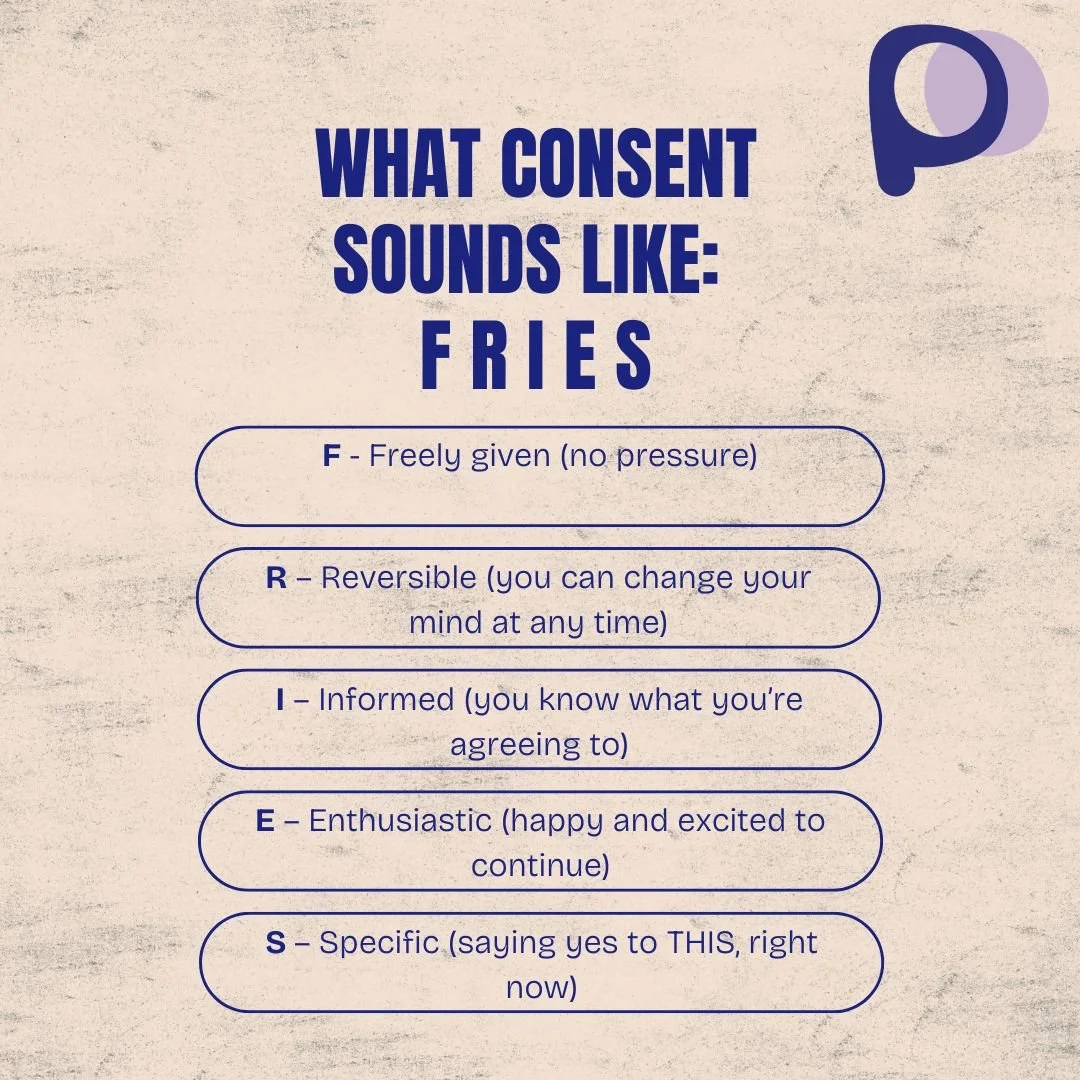
Today we're breaking down Consent vs Coercion (LGBTQIA+ edition) using FRIES: Freely given • Reversible • Informed • Enthusiastic • Specific
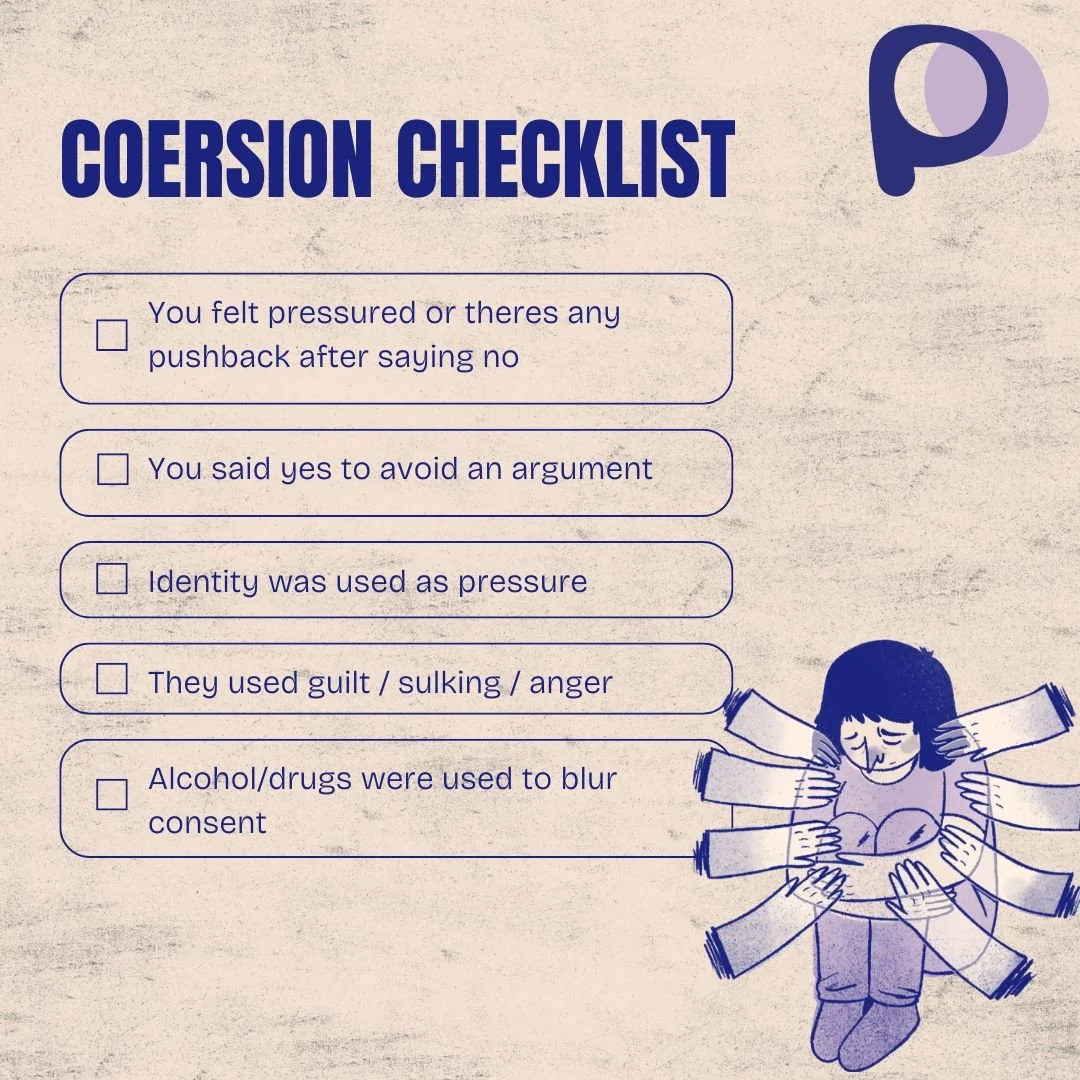
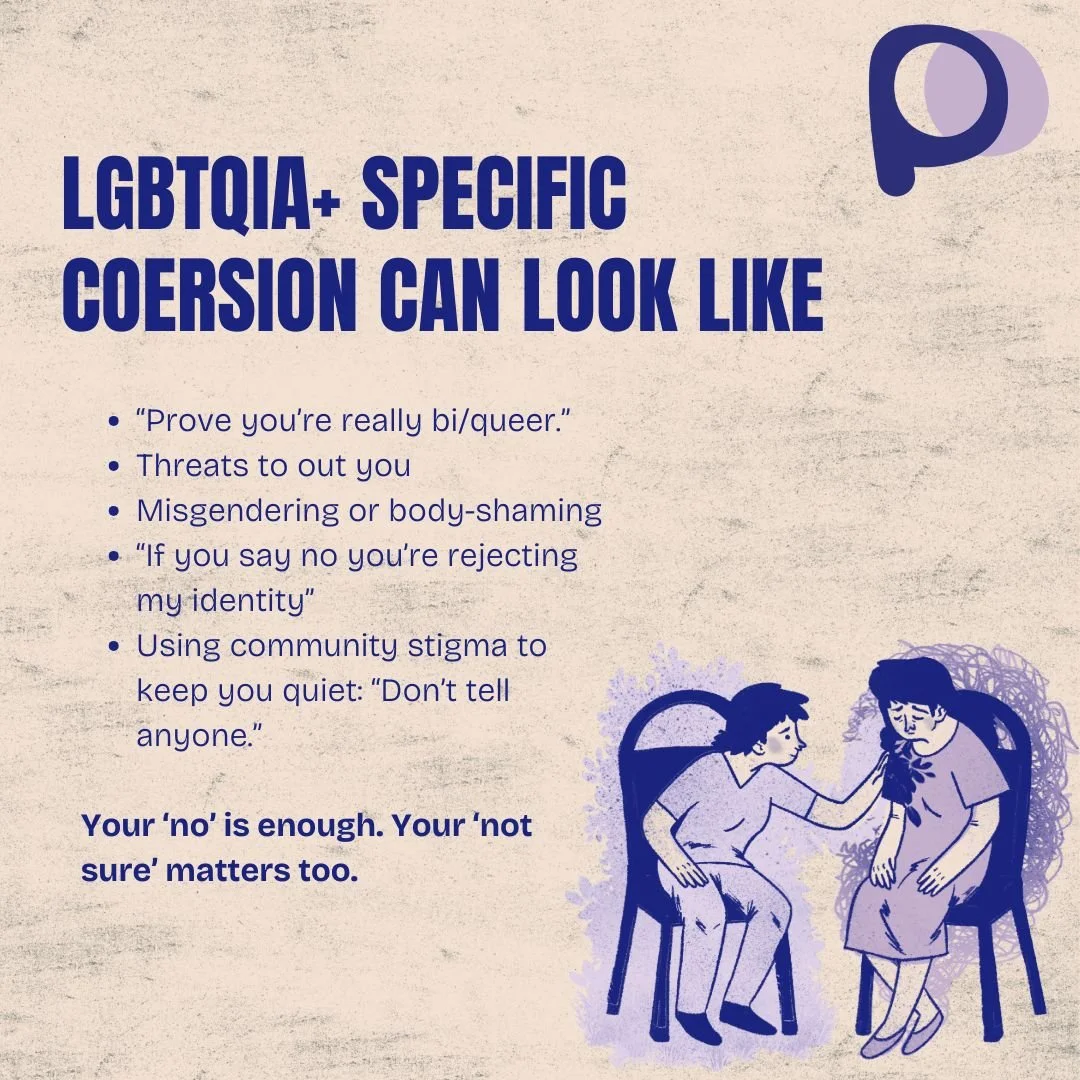
This matters because coercion can be subtle; guilt, pressure, sulking, anger, or using alcohol/drugs to blur consent. And in LGBTQIA+ relationships, coercion can also be identity-based and can involve relationship dynamics that are not otherwise commonly seen.
As it’s LGBT+ History Month, it’s worth naming that stigma and silence can make coercion harder to recognise, and harder to disclose. LGBT+ History Month feels like a good time to share a mini directory of organisations doing great sexual health and consent education. If you’re a practitioner looking for resources, these are worth knowing about and I’d love to connect with others working in this space too.
If you work in support services/HR/education/health: what would help you feel more confident spotting coercion and responding well? Or, teaching people about LGBTQIA+ abuse? (Training topics, policies, language, referral routes. I’d love your input.)