Checking In With Your Queer Community This December
The festive season can be a joyful and connective time, but it can also be a difficult and risky period for many LGBTQIA+ people. Alongside celebrations and rest, this time of year can bring isolation, heightened family pressure and fewer chances to access support. For LGBTQIA+ people who already feel unsafe, unseen or marginalised, December can intensify these experiences.
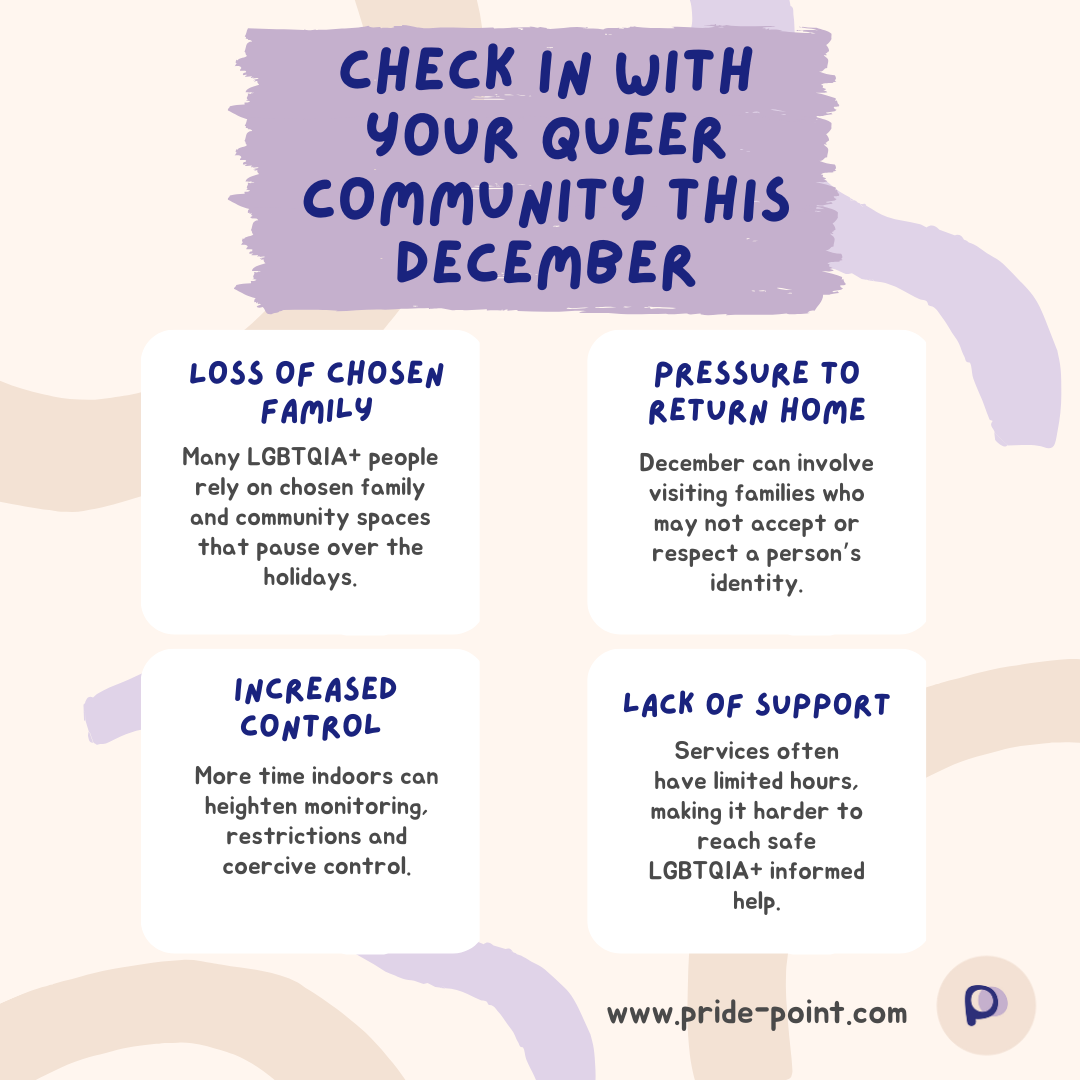
One of the biggest changes for many LGBTQIA+ people is the temporary loss of chosen family and community spaces. Queer friendships, community groups and LGBTQIA+ venues often provide the everyday safety, validation and connection that people rely on. When these spaces pause or close over the holidays, people can be left feeling more alone and less grounded in their identities.
There can also be strong pressure to return to family homes that may not be accepting or supportive. For some LGBTQIA+ people, visiting family means going back into environments where their identity is questioned, minimised or openly rejected. This can create emotional strain, anxiety and fear, particularly when people feel they need to hide or minimise who they are in order to keep the peace.
For those in relationships, the festive period can also change dynamics at home. More time spent indoors, being off work or away from usual routines can increase opportunities for monitoring, restrictions and control from a partner. For LGBTQIA+ people experiencing domestic abuse or coercive control, this can mean more time under scrutiny, less privacy and fewer safe ways to seek help or reach out to others.
At the same time, access to support can become more difficult. Many services operate reduced hours, staff are on leave and specialist LGBTQIA+ informed support may be harder to reach. When you are already feeling unsafe or controlled, the idea of contacting a service that does not understand LGBTQIA+ lives or relationships can be daunting. Reduced availability during December can make people even more reluctant to seek help.
If you are responsible for staff wellbeing, safeguarding or inclusion, this is a crucial moment to act. Making sure your team understands LGBTQIA+ specific risks during the festive period is not only the right thing to do, it directly affects how safe your colleagues and the people who use your services feel. This might mean offering clear information about support options, reviewing internal policies and procedures, or ensuring staff are confident in how to respond when someone discloses abuse or asks for help.
Informed and inclusive practice recognises the realities of LGBTQIA+ people’s lives, including the role of chosen family, the impact of unsupportive or abusive home environments and the ways coercive control can show up in queer relationships. It involves listening carefully, believing people’s experiences, avoiding assumptions about gender, sexuality or relationship structures and understanding how homophobia, biphobia and transphobia shape people’s options. It also means making sure staff have access to training, reflection and guidance so that they can respond with confidence and care.
Checking in with your queer community this December does not always require grand gestures. Small actions can make a real difference: sending a message to a colleague or friend, creating quiet spaces for people to opt out of festive activities, reminding staff of confidential support routes and being explicit that LGBTQIA+ people are welcome, believed and supported. When organisations take these steps seriously, they help create safer environments where LGBTQIA+ people can navigate the festive season with more dignity, choice and connection.