Domestic Abuse Inclusive Practice Training
Understanding LGBTQIA+ domestic abuse and coercive control is essential for any organisation that wants to keep people safe. Inclusive practice is not just about awareness or policies on paper; it is about having the skills and confidence to recognise harm, respond safely and create a culture where LGBTQIA+ people feel seen, respected and supported. The way staff understand LGBTQIA+ lives directly shapes how safe people feel accessing and being part of your organisation.
Pride Point’s Domestic Abuse Inclusive Practice Training is designed to build that understanding and confidence. The training explores the realities of LGBTQIA+ relationships, including how identity-based power dynamics and societal stigma can shape people’s options and experiences. We look at the specific barriers to safety that many LGBTQIA+ people face, from fear of not being believed, to worries about “outing” themselves, to concerns about how services will respond. Our approach is grounded in research, lived experience and trauma-aware practice, and is designed to support practitioners, teams and leaders in their everyday work.
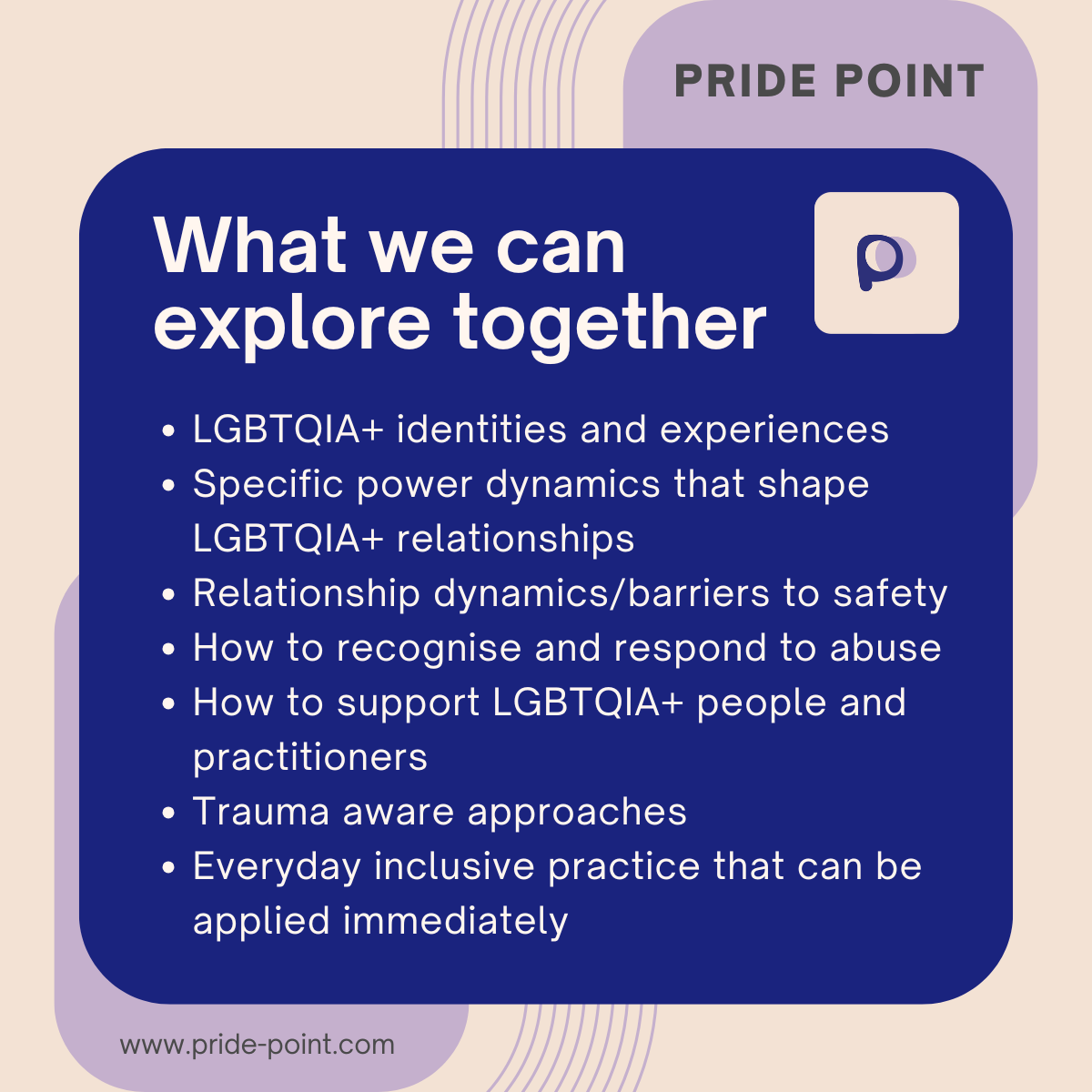
During the training we explore LGBTQIA+ identities and lived realities, as well as the particular power dynamics that can shape LGBTQIA+ relationships. We look at relationship patterns and barriers to safety, and how domestic abuse and coercive control can appear in LGBTQIA+ contexts, including ways that abuse can be overlooked or misread. Participants consider how to recognise and respond to domestic abuse, how to support people who may be experiencing or using harmful behaviours, and how to respond in ways that are centred on safety, dignity and choice. We also spend time on how to support LGBTQIA+ practitioners and colleagues, and how internal culture and team dynamics affect people’s sense of safety at work.
A key thread throughout the training is trauma-aware and compassion-led practice. We explore how homophobia, biphobia, transphobia and other forms of structural inequality intersect with domestic abuse, and how these experiences influence trust, disclosure and help-seeking. Rather than offering one-size-fits-all checklists, the training focuses on reflective, relational practice and practical skills that can be applied immediately. Everyday inclusive practice – from the language we use, to how we design services, to how we respond when someone discloses harm – is treated as central, not an add-on.
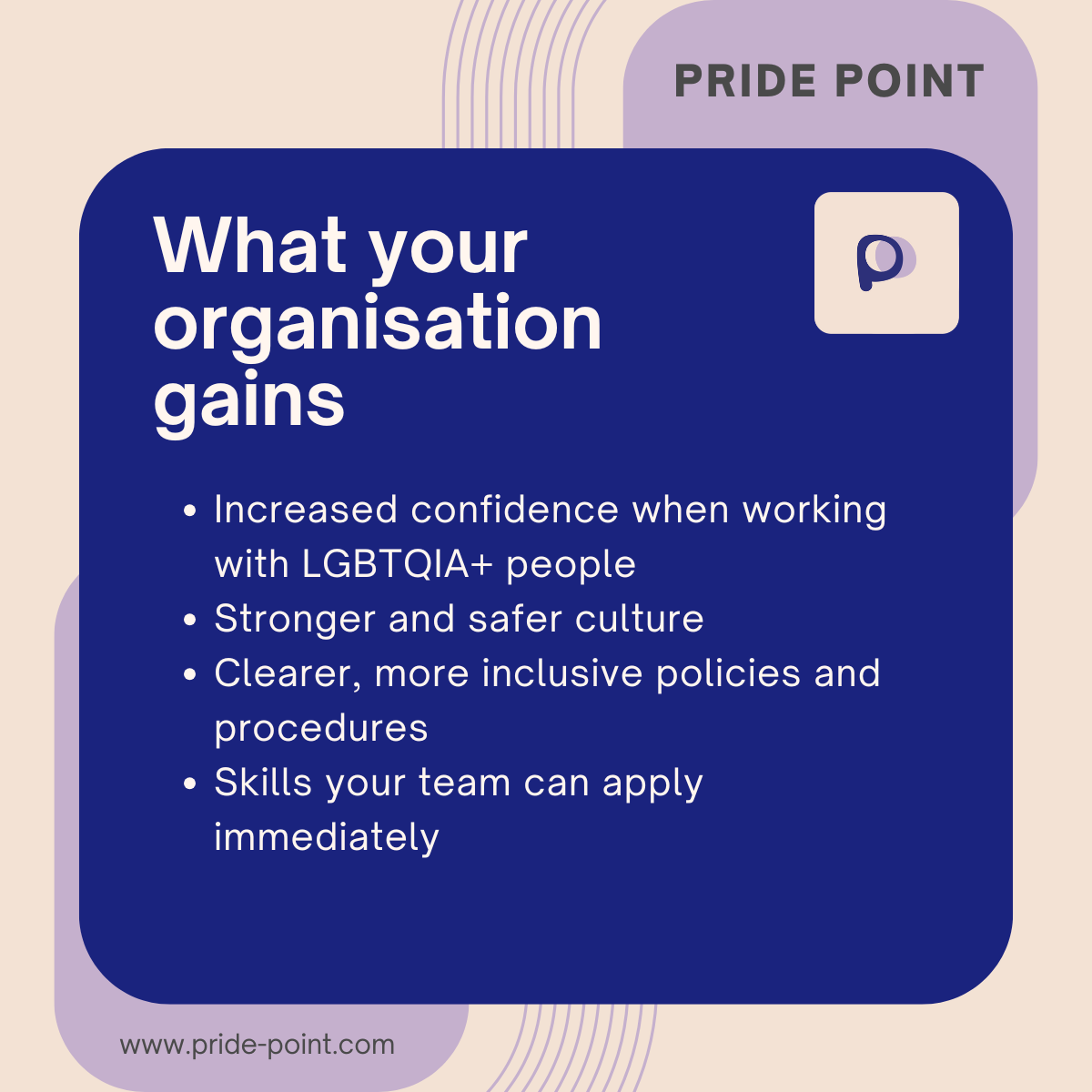
By investing in Domestic Abuse Inclusive Practice Training, organisations can strengthen safety, inclusion and wellbeing across their teams and services. The outcomes include increased confidence when working with LGBTQIA+ people, a stronger and safer organisational culture, clearer and more inclusive policies and procedures, and practical skills that staff can use straight away. As you plan ahead for the new year and beyond, this is a meaningful moment to invest in specialist training that supports your organisation to respond to LGBTQIA+ domestic abuse and coercive control with knowledge, care and accountability.