Abuse Isn’t Always Violent: Coercive Control in LGBTQIA+ Relationships
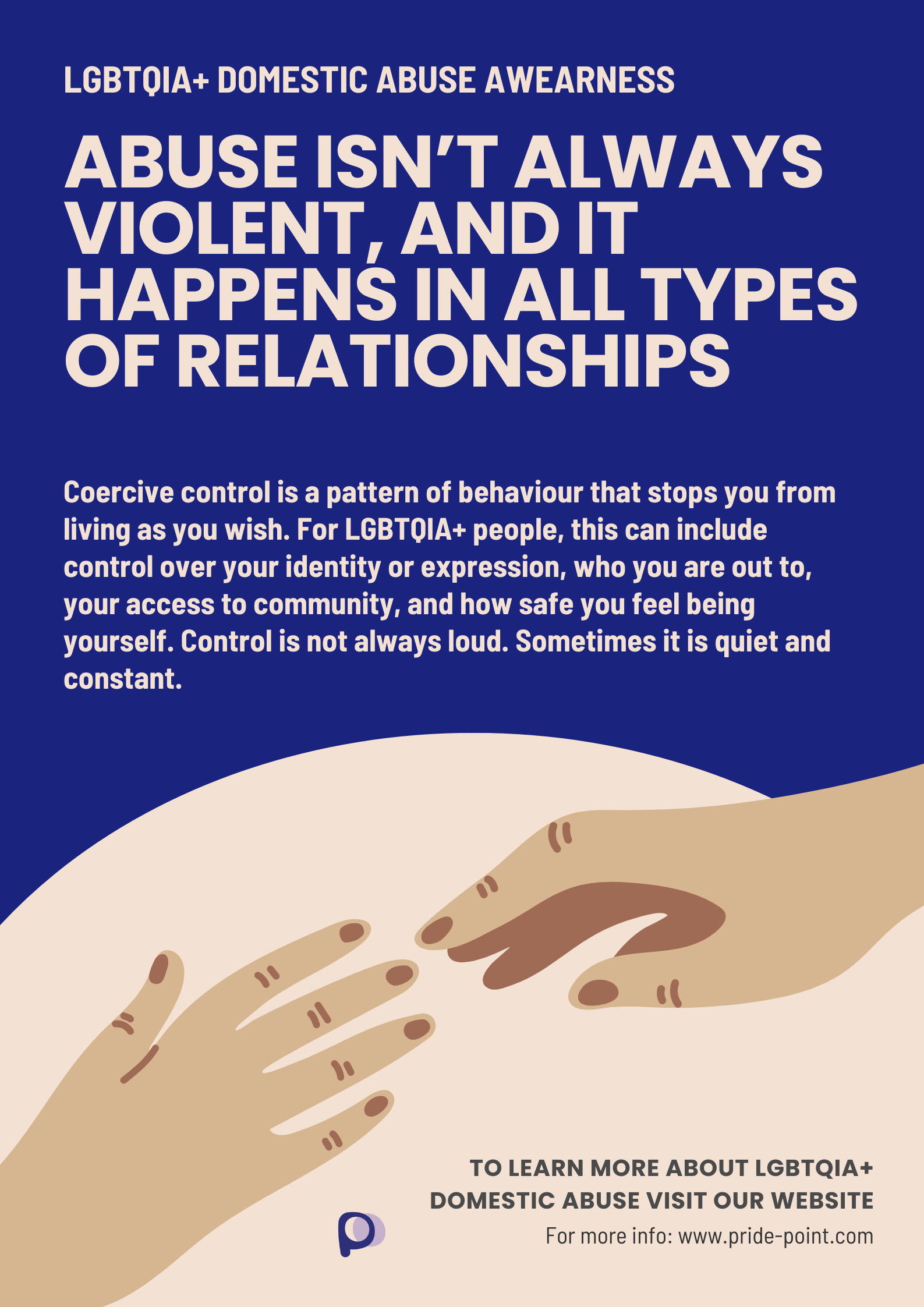
Abuse is not always violent, and it does not always look like the images people expect. Many forms of harm are subtle, gradual and hidden in everyday interactions. In LGBTQIA+ relationships, coercive control can be quiet, constant and deeply impactful, shaping how safe someone feels in their home, in their community and in their own identity.
For LGBTQIA+ people, coercive control can involve patterns of behaviour that limit freedom, safety or autonomy. This might include control over identity and expression, such as pressuring someone to dress or present in a particular way, or insisting they hide parts of who they are. It can look like pressure about who you are “out” to, forcing someone to disclose or conceal their sexuality or gender identity on someone else’s terms. It can also involve restricting access to queer community spaces, online networks or supportive friends, leaving someone more isolated and dependent on the person causing harm. Over time, these behaviours can make it feel unsafe to be your full self.
These patterns can be difficult to recognise, particularly when they are framed as care, concern or even activism. A partner might claim they are “just worried” about how others will react, or that they are “protecting” someone from discrimination, while in practice limiting their choices and controlling major aspects of their life. Because LGBTQIA+ people often navigate external stigma and prejudice, it can be hard to tell where genuine care ends and coercive control begins. Many people learn to minimise their experiences or feel they should be grateful to have a relationship at all, especially if they have faced rejection elsewhere.
Understanding these dynamics is essential for any organisation that wants to support LGBTQIA+ staff, clients or communities with confidence and care. People may carry experiences of domestic abuse and coercive control that are invisible on the surface but very real in their impact on mental health, work, relationships and safety. When organisations overlook LGBTQIA+ experiences or rely on narrow images of what “real” abuse looks like, they risk missing signs of harm, responding insensitively or leaving people without meaningful options.
Inclusive practice means recognising that abuse can happen in all types of relationships and that it does not always involve physical violence. It involves listening without assumptions, using language that reflects diverse genders and sexualities, and understanding how identity-based power dynamics and social stigma shape people’s experiences. It also means making sure staff are equipped with trauma-aware knowledge about LGBTQIA+ domestic abuse and coercive control, and that policies, procedures and cultures are designed with LGBTQIA+ lives in mind. When organisations invest in this kind of learning, they help create environments where LGBTQIA+ people can speak about harm, seek support and feel safer being themselves.