Hidden in Plain Sight
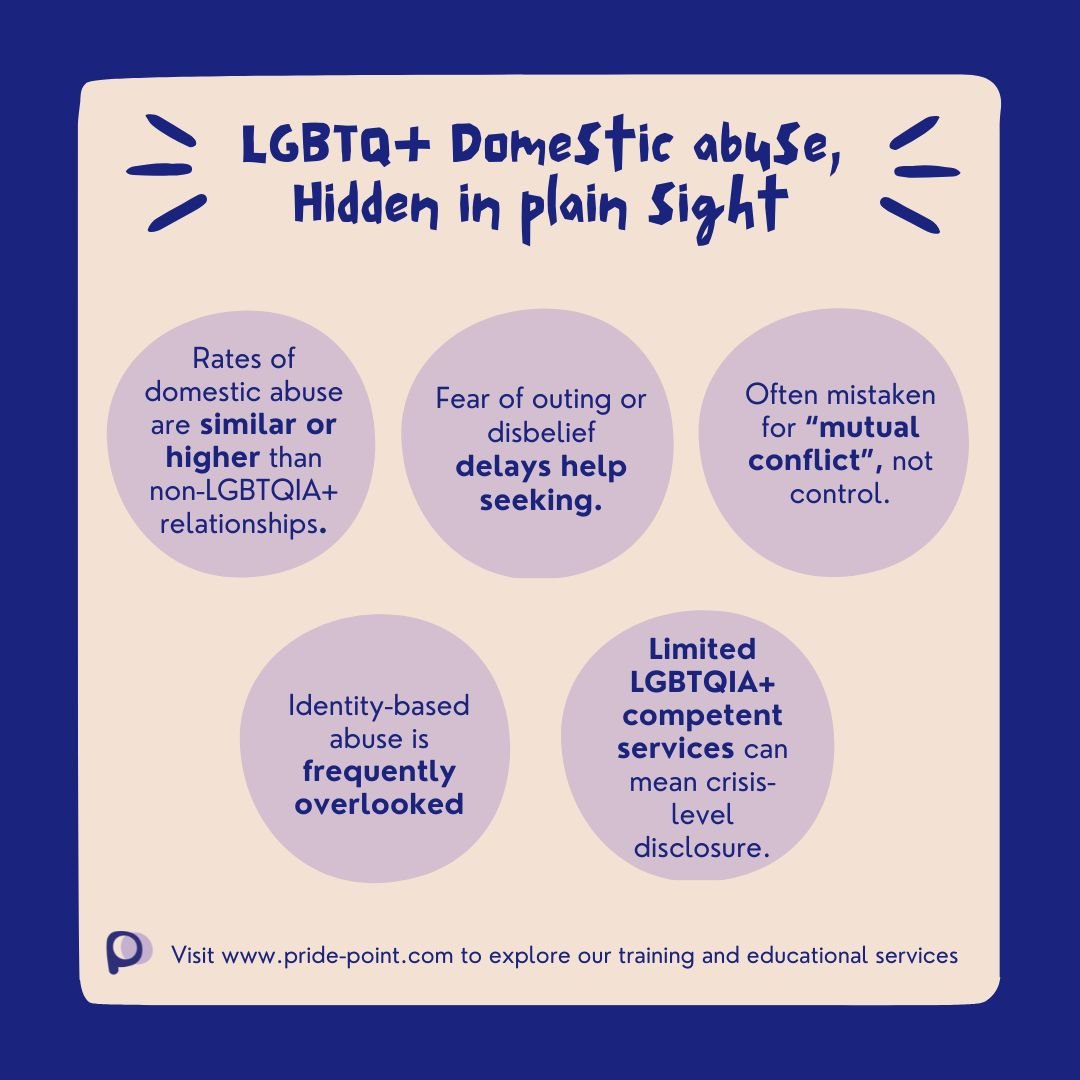
Domestic abuse does not look the same for everyone. For many LGBTQIA+ people, harm is shaped by identity as much as behaviour. Fear of being outed can delay help-seeking, especially when disclosure risks housing, work, family or community connection. Identity-based abuse, such as misgendering or undermining someone’s sexuality, is often minimised or not recognised as abuse at all. Control is frequently misread as “mutual conflict”, leaving survivors blamed rather than supported. And when services lack LGBTQIA+ competence, asking for help can feel risky rather than safe.
This is why inclusive, informed responses matter.
At Pride Point, we provide training and education on LGBTQIA+ domestic abuse and coercive control, alongside work on building healthy relationships and safer systems. We also advocate for better recognition of identity-based harm so people are believed earlier and supported properly.
When people feel understood, it becomes easier to ask for help, and easier to prevent harm.