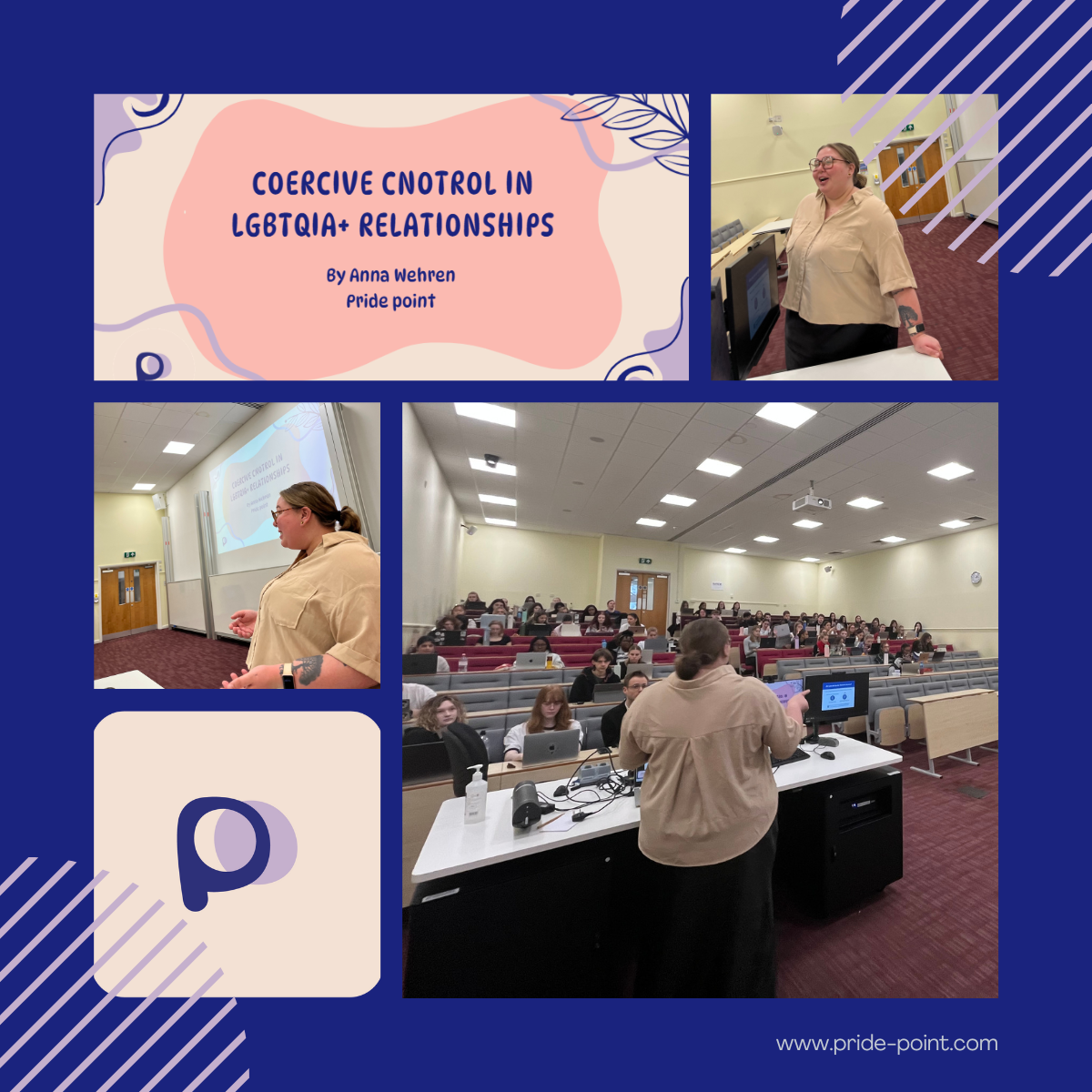
Bringing LGBTQIA+ Perspectives on Coercive Control into Criminology Education
I was excited to deliver my first talk as Pride Point at Loughborough University, speaking to first year Criminology students about coercive control in LGBTQIA+ relationships. Creating space for LGBTQIA+ inclusive discussions within higher education is essential if future practitioners, researchers and policymakers are to develop informed and effective responses to domestic abuse.
The session followed a powerful and grounding talk from Living Without Abuse (LWA), who introduced students to the realities of domestic abuse, coercive behaviour and the wider support landscape. Their contribution provided an important foundation, situating domestic abuse within broader social, legal and support contexts.
Building on this, my session focused specifically on queer perspectives and the ways coercive control can manifest within LGBTQIA+ relationships. While coercive control is increasingly recognised within criminology, safeguarding and policy frameworks, it is still too often framed through heterosexual and cisgender assumptions. This can result in LGBTQIA+ experiences being overlooked or misunderstood.
What does coercive control look like in LGBTQIA+ relationships?
For LGBTQIA+ people, coercive control may include:
Threats of outing or disclosure
Control over gender identity or expression
Isolation from LGBTQIA+ community spaces
The misuse of queer language, politics or identity as a form of power
Without an understanding of these dynamics, responses to domestic abuse risk being incomplete and ineffective.
Why inclusive education matters
It was encouraging to see students engaging thoughtfully with these issues. Their questions and reflections demonstrated an awareness of how power, identity and inequality shape experiences of harm, safety and access to support. These conversations are vital within criminology education, where future professionals are developing the frameworks they will later apply in practice.
Bringing LGBTQIA+ experiences into domestic abuse education is not an optional addition. It is fundamental to evidence based, inclusive and trauma aware practice. Without this knowledge, systems designed to protect people may unintentionally exclude those most in need of support.
From research to practice
Through Pride Point, my work focuses on translating academic research on LGBTQIA+ relationships, coercive control and domestic abuse into education, training and organisational practice. This includes work within higher education, alongside consultancy and training for organisations and practitioners.
By embedding LGBTQIA+ inclusive perspectives into teaching and professional development, we can support safer responses, stronger policy and more inclusive practice across sectors.
Thank you to Laura Valadez for creating space for this important discussion, to Living Without Abuse for their vital contribution, and to the students for their openness and engagement. I look forward to continuing these conversations throughout the year.