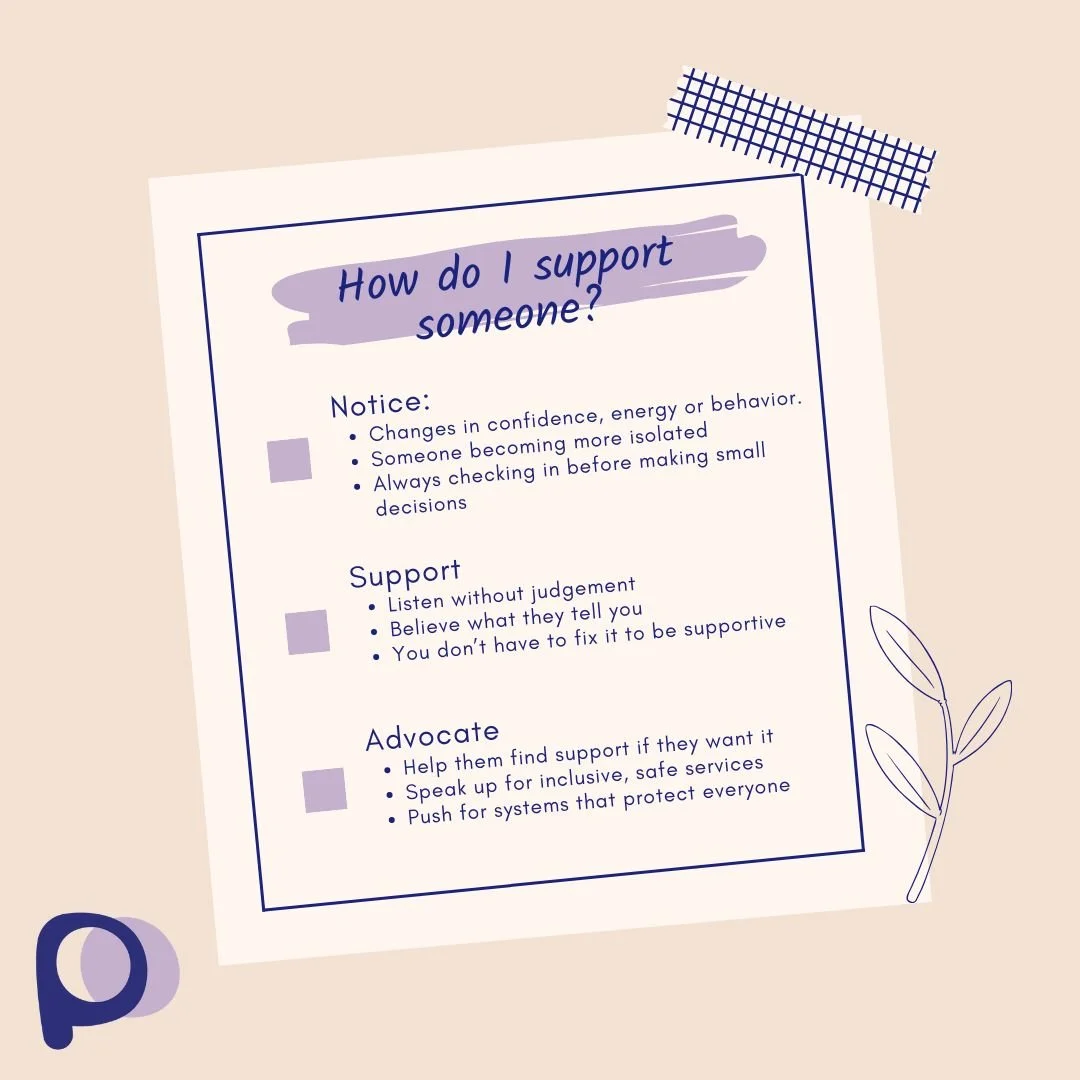
How Do I Support Someone?
If you’re worried about a friend, family member or colleague in 2026, it can be hard to know what to do or say.
When it comes to domestic abuse and coercive control, especially in LGBTQIA+ relationships, the signs are not always obvious. Often it’s the subtle shifts that matter most.
At Pride Point, we often talk about three simple steps that can help turn care into action:
Notice
- Changes in confidence, behaviour or connection. Someone becoming more isolated or always checking in before making small decisions.
Support
- Listen without judgement. Believe what they tell you. You don’t need to fix it to be supportive.
Advocate
- Help them find support if they want it. Speak up for inclusive services and safer systems.
Feeling believed and supported can make it easier for someone to reach out. Small actions really can make a difference.