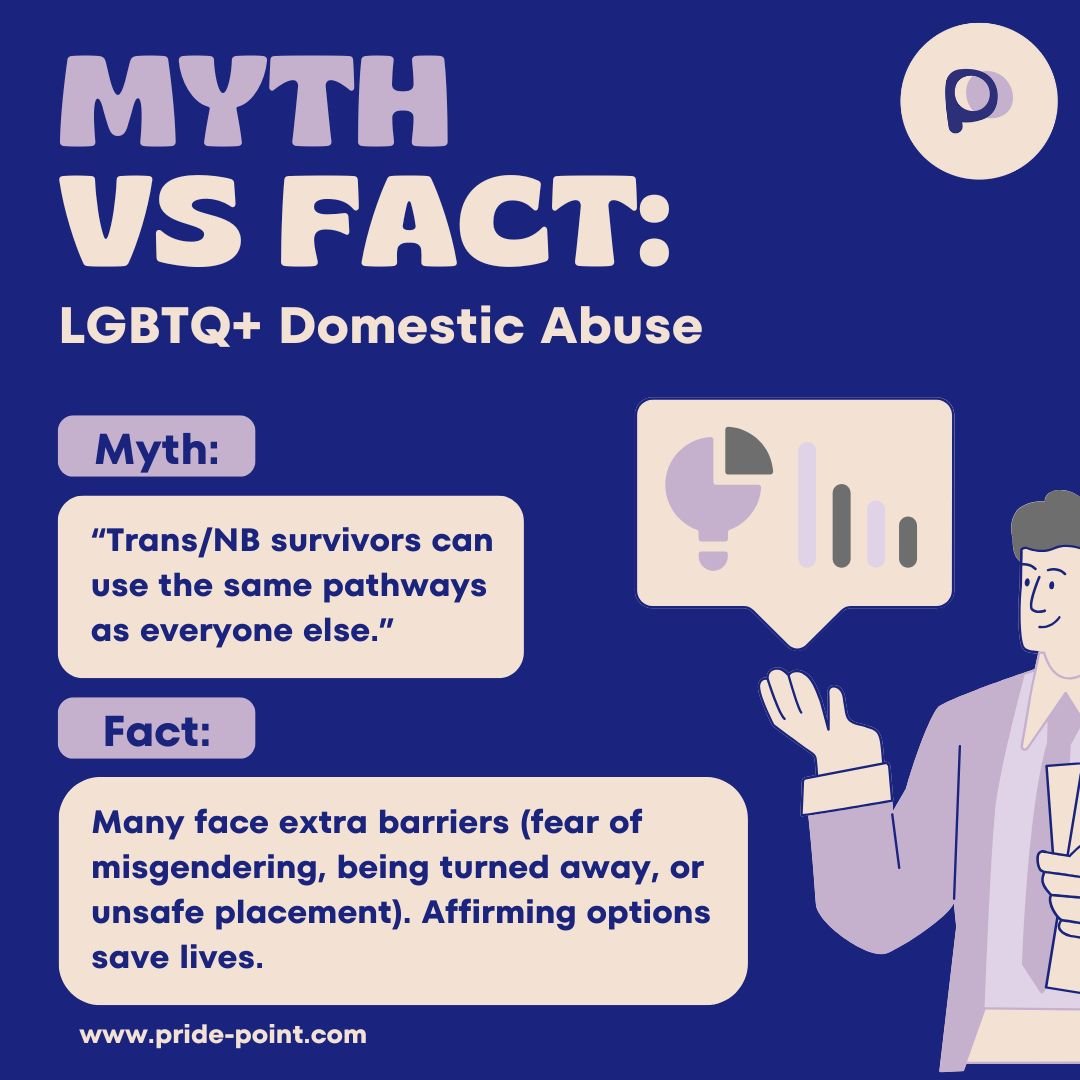
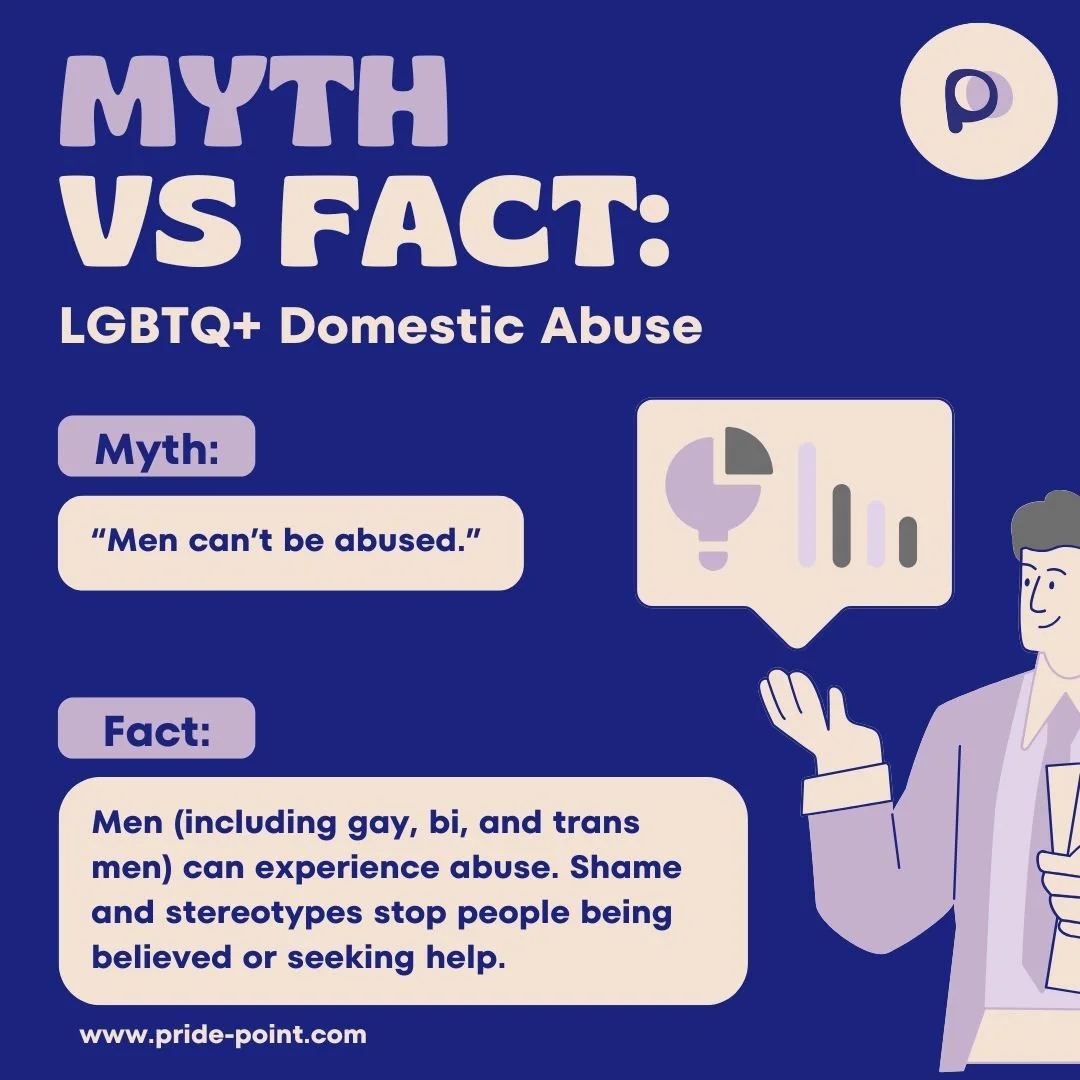
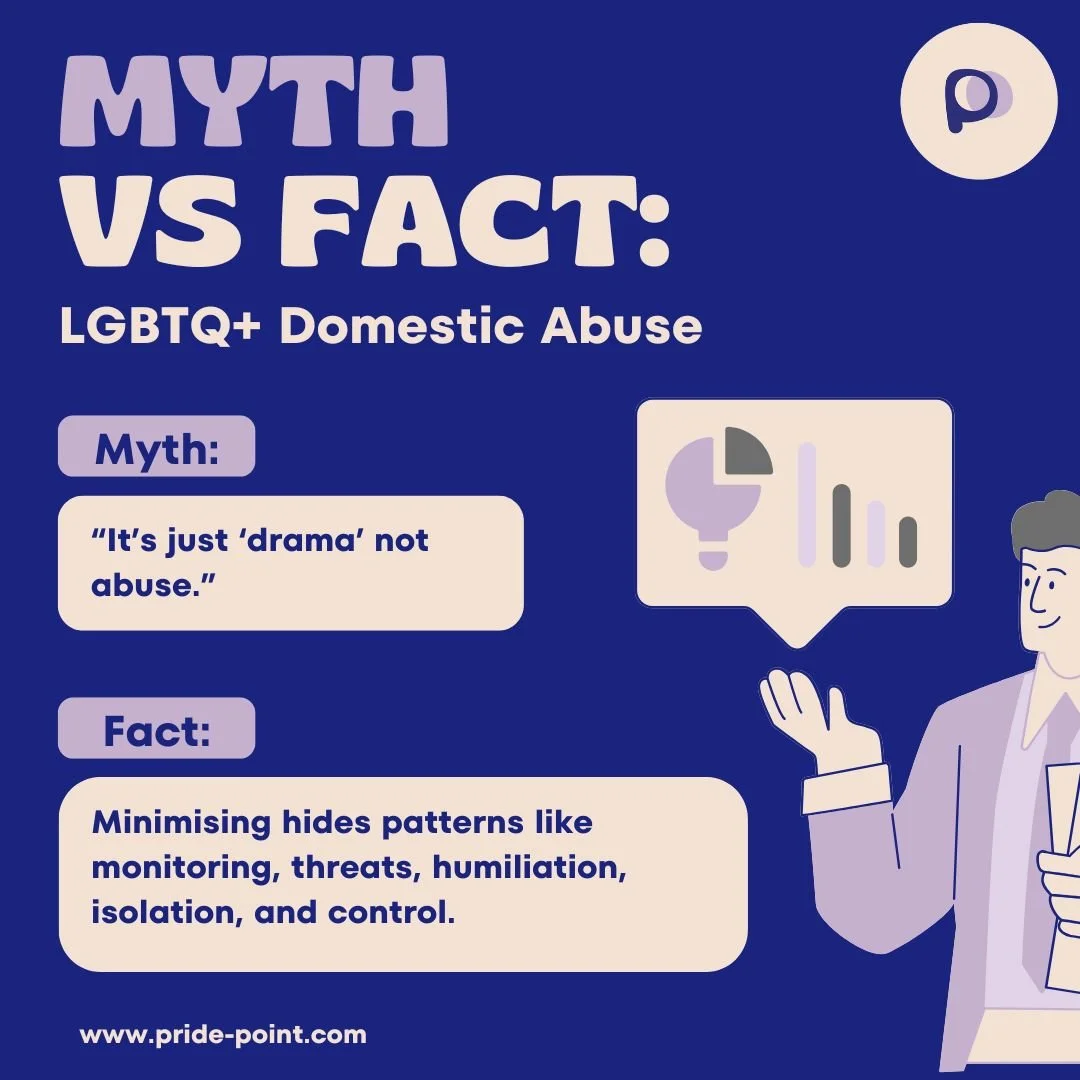
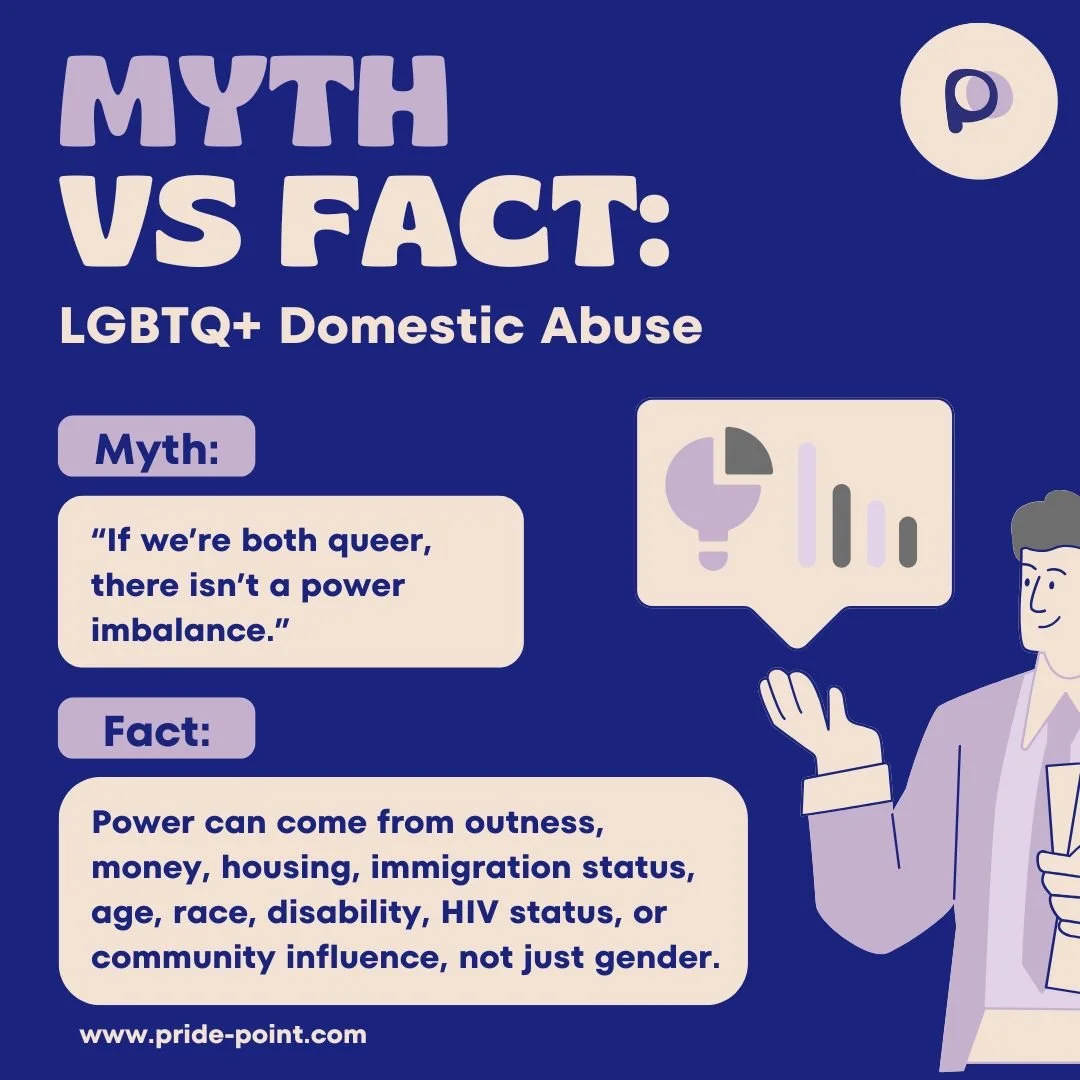
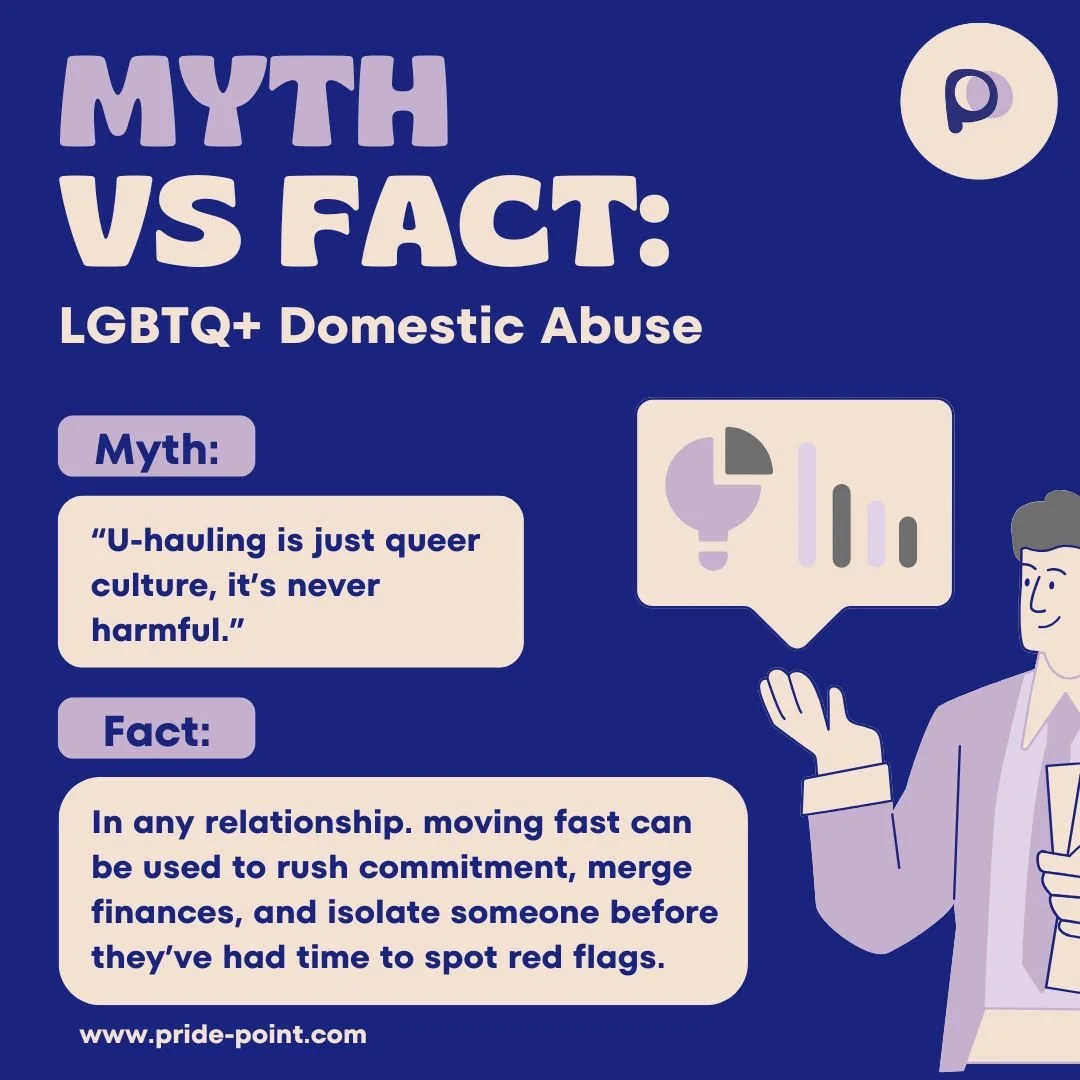
Myth vs Fact
Week 2 of our awareness campaign and we’re naming something that doesn’t get said loudly enough. When someone discloses an unhealthy relationship, how you respond can either reduce risk, or increase it.
For LGBTQ+ people, support can be complicated by fear, not being believed, or being pushed toward services that don’t feel safe or inclusive. So if someone tells you what’s happening, these 9 steps matter:
1) Start with belief
“I believe you.” LGBTQ+ survivors are often dismissed as “it’s mutual” or “not serious” because it doesn’t fit straight/cis stereotypes.
2) Ask what’s safe to share
Check what details are okay to share, especially anything relating to gender or a relationship that sits outside what people assume is the “norm”.
3) Let them be in control
Taking over can replicate control. Offer support without forcing actions, timelines, or reporting.
4) Don’t assume they have a safe place to go
“Going home” can mean being rejected, misunderstood, or unsafe. Even shelters/services might not feel safe for LGBTQ+ people, especially trans and non-binary people.
5) Offer them choices
Small options build agency: “Do you want me to sit with you, call someone with you, help you plan, or just listen?”
6) Don’t rely on assumptions about domestic abuse
In LGBTQ+ relationships, abuse can include aspects of identity and relationships you may be unaware of, so keep listening actively and keep an open mind.
7) Don’t judge them
Judgement increases isolation, and isolation is what abuse feeds on. Stay steady, even if they go back or aren’t ready.
8) Help them find the right support
Not all support is LGBTQ+ competent. Help them look for affirming options (and offer to go with them, if they want).
9) Keep going, it’s not always as simple as it looks
Leaving can be the most dangerous point. Consistent check-ins and long haul support matter.
At Pride Point, we help organisations close the LGBTQIA+ Domestic Harm Gap by building inclusive, trauma-informed systems that respond with confidence and competence, not assumptions.
Save/share this for when someone discloses to you. And if your workplace wants to respond better, visit our website to explore training, consulting, and cultural change support.